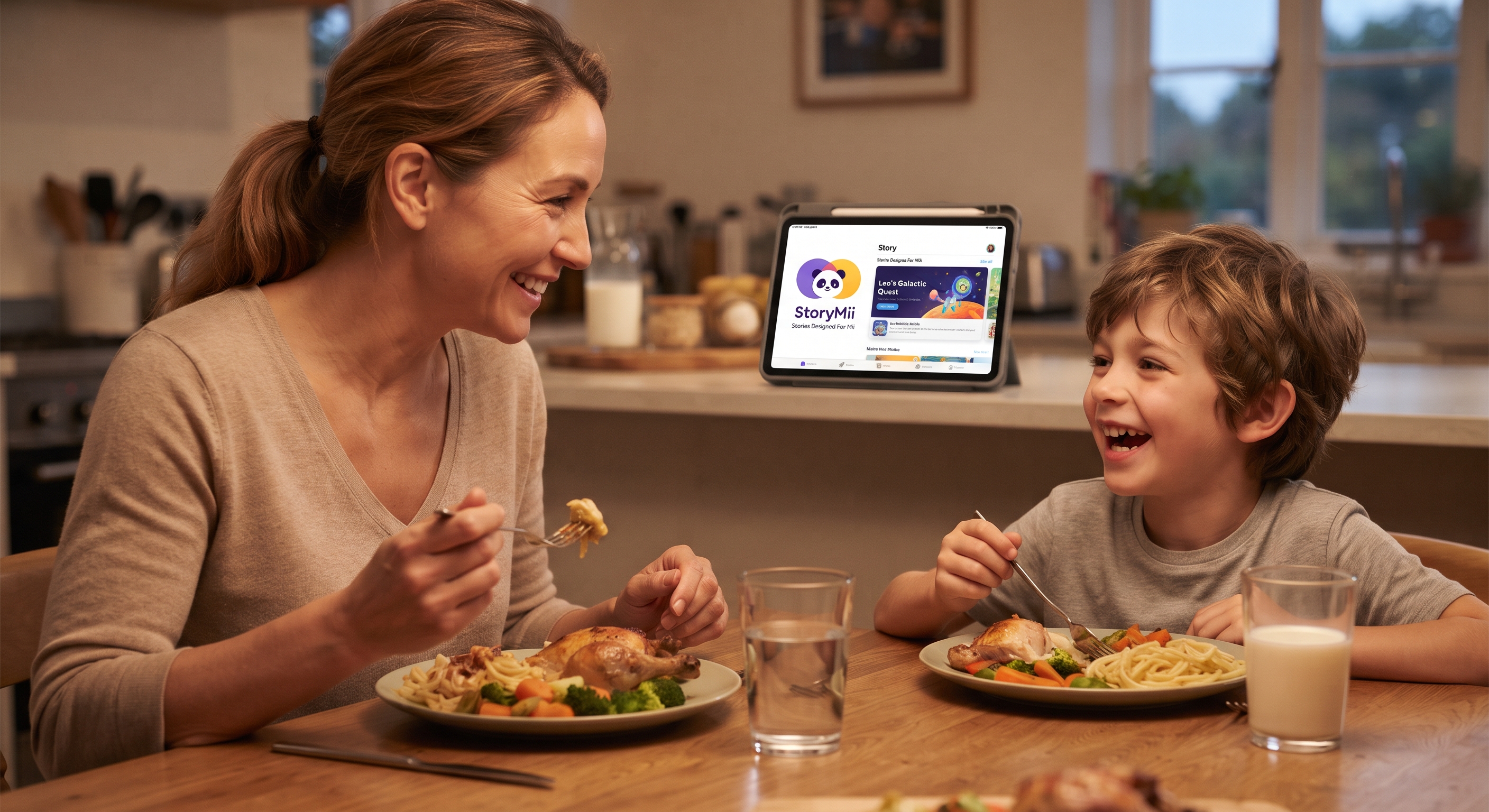
Most of us know that familiar knot of parental guilt. You hand over a tablet, hoping for ten minutes of quiet to prep dinner or answer an urgent email, and instantly watch your child zoning out to fast-paced video feeds or endless, passive scrolling.
We live in a digital world, so we know keeping kids completely away from screens is unrealistic. But we desperately want those screens to act as tools for growth rather than digital babysitters.
If you have ever wondered how to shift your child from a passive spectator to an active thinker, the secret is not banning technology. It is changing the nature of how they interact with it. It is about moving from consumer to architect.
The Hidden Trap: Why Traditional Books Feel Like Assigned Homework
For many children—especially reluctant readers, neurodivergent learners, or kids wrestling with second-language acquisition—traditional books can feel inherently exclusionary.
Think about it from a child’s perspective. A conventional book arrives as a closed loop. The author made all the choices: the plot twists, the vocabulary words, the pacing, and the hero's identity. When a child struggles to connect with those pre-packaged choices, they do not blame the book. They blame themselves and think, "I am bad at reading."
That friction turns reading time into a battle of wills.
When children feel like they have zero agency over a narrative, their brains treat the text as an obligation rather than an invitation. They look for escape hatches, which leads right back to video games or frantic animations where they finally get to hold the steering wheel.
The Science of Ownership: Why Co-Creation Changes Everything
Cognitive psychology tells us that learning is fundamentally an active, constructive process, not a passive absorption exercise.
When children shift from listening to a story to directing it, a neurological transformation happens:
- Dopamine Meets Literacy: Active generation triggers reward pathways in the brain. The reward is not just finishing a story; it is discovering what happens because of their specific choice.
- Cognitive Investment: Research on self-determination theory shows that autonomy dramatically spikes task persistence. A child who might abandon a standard library book after two paragraphs will happily read a custom adventure if they invented the protagonist's sidekick.
- Inclusive Reflection: When a child sees their exact interests, unique worldview, or learning style respected in the structure of a story, the intimidation melts away.
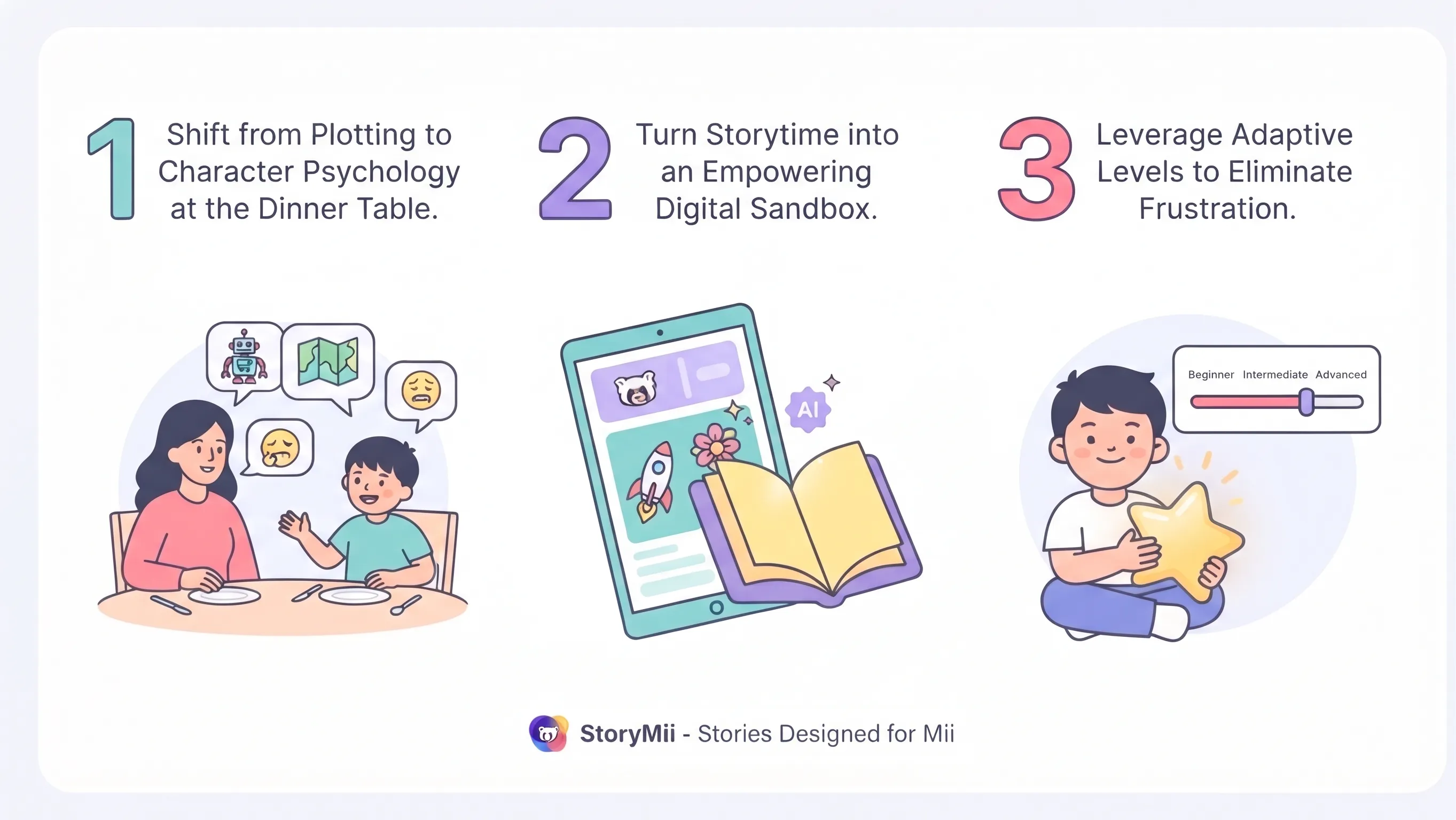
Three Actionable Takeaways: How to Elevate Your Routine Tonight
Transitioning a child from passive viewer to creative architect does not require a complicated lesson plan. Here are three clear, actionable steps you can start tonight:
- 1. Shift from Plotting to Character Psychology at the Dinner TableTake your storytelling prompts past simple action verbs and into emotional choices. Instead of asking what happens next, ask why the character feels that way. Try this tonight: "Our space explorer just found a locked door on Mars, but they left their key back on Earth. Are they feeling nervous, curious, or secretly relieved? And what does their robot companion do to help them?" This builds emotional literacy alongside narrative structure.
- 2. Turn Storytime into an Empowering Digital SandboxWhen you use a platform like StoryMii, you are not just generating a bedtime story. You are handing your child the architectural blueprints of a world. Let them pick the absurd combinations. If they want a story about a cautious green dinosaur who bakes cupcakes in a submarine, let the platform bring that exact vision to life with vibrant illustrations. When the art matches their exact mental image, reading stops being a test and becomes a mirror of their brilliance.
- 3. Leverage Adaptive Levels to Eliminate FrustrationReading stamina grows in the sweet spot between too easy and overwhelming. Once your custom adventure is generated, use adaptive reading calibration to match your child's exact stage. Let the vocabulary scale with their confidence so they push through challenging words simply because they need to know what happens to their character next.
The Takeaway
Parenting in the digital age requires a shift in perspective. We do not have to police every minute of screen time if we change the nature of the screen itself.
When you move past passive consumption and invite your child to become the co-creator of their own literary universe, technology stops being a distraction and starts becoming a bridge. It turns screen time into family connection time, and turns reluctant readers into lifelong authors.
Ready to give your child the pen for their next adventure? Try creating your first personalized story free today at StoryMii.com!
📚 References & Cited Research
- Deci, E. L., & Ryan, R. M. (2000). The "What" and "Why" of Goal Pursuits: Human Needs and the Self-Determination of Behavior. Psychological Inquiry.
- Csikszentmihalyi, M. (1990). Flow: The Psychology of Optimal Experience. Harper & Row.
- Bus, A. G., Takacs, Z. K., & Kegel, C. A. (2015). Affordances and Limitations of Electronic Storybooks for Young Children's Emergent Literacy. Developmental Science.