
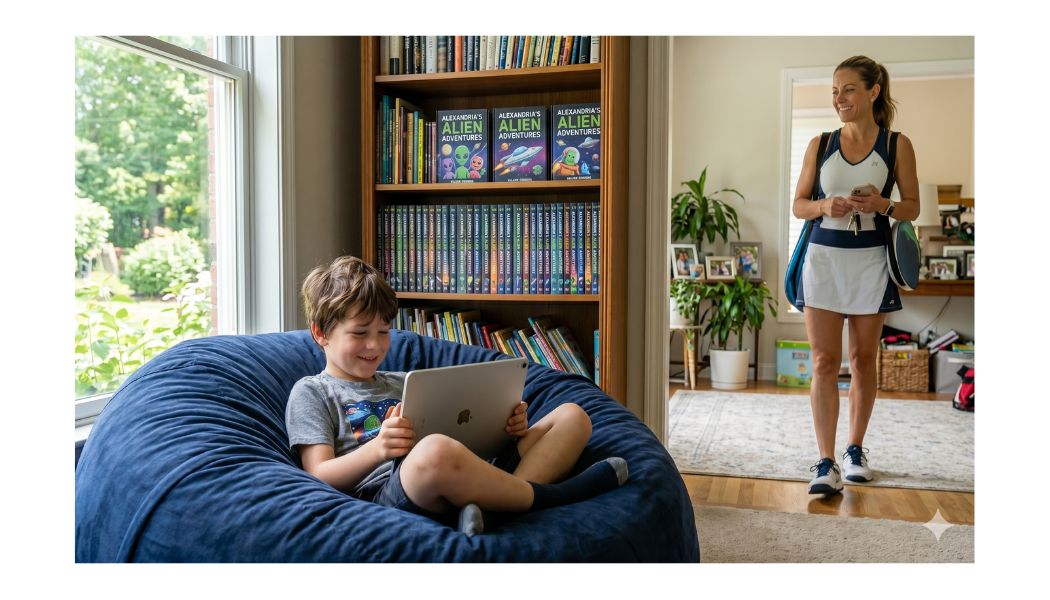
Stop the "Summer Slide": 3 Stress-Free Hacks to Keep Kids Reading 📚✨
It’s that time of year again. The school bags are thrown into the back of the closet, the morning alarms are turned off, and the glorious, unstructured freedom of summer takes over. For our kids, it’s paradise. But for us as parents and guardians, a tiny voice of panic often sets in: How do we keep their brains active when all they want to do is run outside, play video games, or watch YouTube Shorts?
The Summer Challenge: The "Summer Slide"
The transition from a highly structured school day to the open canvas of summer is one of the biggest disruptions a child faces. Without the daily routine of the classroom, it is incredibly easy for reading development to stall.
Educators call this the "Summer Slide"—a period where children can lose months of hard-earned literacy progress over the break.
If you are guiding a young reader—especially one who already finds static pages a bit of an uphill battle—you might dread the idea of forcing them to sit down with a book. But summer reading shouldn't feel like a continuation of winter homework. We don't need to turn our living rooms into rigid classrooms. Instead, we can bake literacy into the very fabric of summer fun.
3 Simple, Stress-Free Summer Strategies
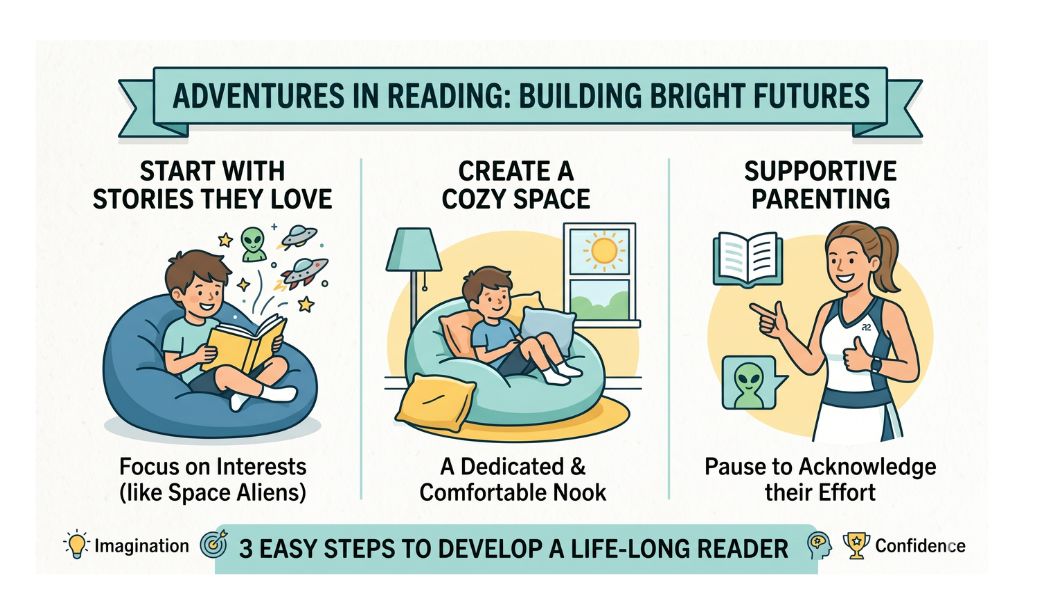
1. Hook Them with a High-Interest Series
Forget the "assigned reading" lists that feel like a chore. Summer is all about reading for pure pleasure. The secret to building a habit is momentum, and nothing builds momentum like a great book series.
- Graphic Novels are Goldmines: Series like Dog Man or The Baby-sitters Club are absolute game-changers.
- Built-in Momentum: When a child falls in love with the characters in book one, they don't have to choose what to read next—they automatically want book two.
- Invisible Learning: Let them read what makes them laugh or sparks their curiosity. Graphic novels still build immense vocabulary and narrative mapping skills!
2. Carve Out a "Sacred" Reading Anchor
Trying to randomly enforce reading time in the middle of a chaotic summer day is a recipe for a meltdown. Instead, tie reading to an existing daily transition—an "anchor" in your day. Pick one block of time that works for your family’s rhythm:
- The Morning Block: 20 minutes right after breakfast before the outdoor adventures begin.
- The Afternoon Block: A quiet "cool-down" hour right after lunch when the sun is hottest.
- The Evening Block: A cozy wind-down routine right before bed.
The Power of Routine: When it happens at the exact same point every day, it stops being an argument and simply becomes "just what we do."
3. Gamify the Library Trip with "Summer Reading Bingo"
Instead of just walking down the library aisles, turn the trip into a scavenger hunt.
- Create a Grid: Draw a simple 3x3 grid on a piece of paper with playful challenges.
- Fun Milestones: Include squares like: "Read under a tree," "Find a book about an animal that lives in the ocean," or "Read a page using a funny accent."
- Shift the Role: Giving kids a mission changes their role from a passive follower to an active explorer. A little bit of playful gamification turns a standard chore into an exciting challenge.
The StoryMii Shift: Where Interest Meets Invisible Learning
While these daily routines provide wonderful scaffolding, we know that for many children, a traditional book can still trigger executive function overload. The baseline dopamine levels in a developing brain—especially a neurodivergent one—constantly crave high-interest engagement that standard print struggles to provide.
That is exactly why we built StoryMii. We wanted to create a platform that honors your child's natural summer energy rather than fighting against it.
Custom Universes Built by Your Child
Instead of handed-down stories, StoryMii lets your child co-create the very plots they are diving into. If your kid is hyper-fixated on space travel, deep-sea creatures, or building elaborate block worlds, our platform builds custom universes around those exact interests.
How It Works in the Background
While they are completely immersed in a story they actually want to read, our technology works quietly in the background:
- Adaptive Tracking: It continuously understands where they encounter difficulties and where their interests truly lie, adjusting narrative complexity in real-time.
- Dopamine-Triggering Quizzes: We’ve introduced interactive, gamified quizzes directly into their material. Your young reader earns rewards (like MiiCoins), turning assessment into a milestone achievement.
- Conquering Comprehension: These loops dive deep into reading comprehension—traditionally one of the most difficult, abstract aspects for a young reader to grasp.
By answering questions about characters they helped invent, they develop an immense sense of pride and ownership over their learning. They aren't proving their skills to a worksheet; they are mastering their own creation.
You've Got This!
Summer is long, and parenting is a marathon. Remember: you don't need to be perfect, and you don't need to replicate a school room to raise a reader. By anchoring a few simple habits and leaning into tools that respect how your child's brain is uniquely wired, you can turn this summer from a season of frustration into a season of massive breakthroughs.
Keep it fun, keep it light, and watch them fly.
References & Science-Backed Foundations
- Volkow, N. D., et al. (2009). Evaluating Dopamine Reward Pathway in ADHD. JAMA. ^1
- Barkley, R. A. (2012). Executive Functions: What They Are, How They Work, and Why They Evolved. Guilford Press. ^2
- Dovis, S., et al. (2012). Can Motivation Improve Executive Functioning in Children with ADHD? PLOS ONE. ^3